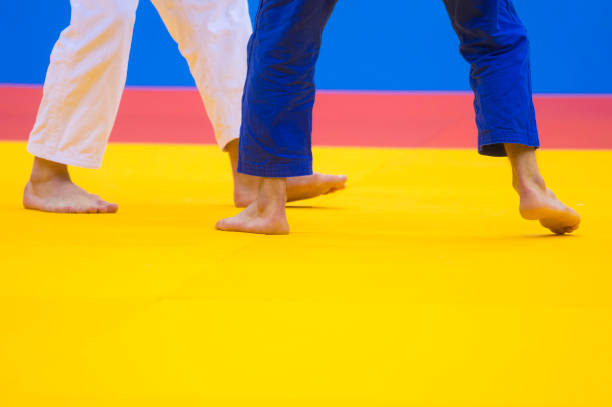
A daily training floor has to accommodate more than one type of contact. Footwork demands predictable traction, kneeling requires comfort and controlled falls may place significant loads on the surface. The priorities differ between clubs that concentrate on striking drills, groundwork or throwing. Defining the main activities makes it easier to compare products without relying on vague labels such as professional grade or extra soft.
Grip must permit movement
Too little traction can make changes of direction unreliable. Too much can make pivots awkward and place unnecessary strain on movement. Texture should be evaluated while athletes perform normal techniques under supervision, not just by rubbing a hand across a sample. Bare feet, training shoes and cleaning conditions can all affect the experience, so suitability depends on how the club actually uses the space. A useful surface feels consistent rather than unusually sticky.
Comfort is not one measurement
Thickness is visible in product descriptions, but it cannot describe landing performance on its own. Density, layers, installation and the underlying floor all influence how impact is felt. For disciplines involving throws, the entire surface system needs assessment against intended use. During floor-based drills, a slightly different priority may be comfortable contact without excessive sinking. Choosing martial art mats by thickness alone ignores these important differences.
Give upkeep a voice
A trial should include the people who clean and maintain the floor, not only the coaches who use it. They may identify awkward corners, seams that collect dirt or storage arrangements that leave surfaces damp. Keep a written inspection checklist with clear action for damage instead of an informal assumption that someone else will report it. Some defects require an individual section to be replaced, while broader movement may indicate an installation problem. Recording when and where trouble occurs helps distinguish normal wear from repeated misuse. This practical evidence can be valuable during future purchasing decisions and helps avoid choosing solely from catalogue descriptions.
Inspect the pressure points
Daily sessions reveal problems first at seams, high-traffic entries and areas used for repetitive drills. Sections that pull apart, curled edges and damaged surfaces can interrupt training and create hazards. Ask how the product is joined or secured, whether sections can be replaced individually and what signs of wear require removal from service. A predictable inspection process matters more than assuming a durable label guarantees years of trouble-free use.
Include cleaning in the decision
Hygiene is an ongoing task in a space where hands, feet and faces may contact the floor. Check the manufacturer’s advice for cleaning agents and drying. Strong chemicals or excessive water may damage some materials or leave the surface slippery. A practical routine should fit the number of classes and the available time between them. Staff should also inspect for trapped moisture, lifting seams and residue before training resumes.
Consider the building
The same surface may behave differently on a hard, uneven or moisture-prone subfloor. Check the condition of the base, any recommended underlay and restrictions on adhesives or permanent fixing. Multi-use venues may need removable sections, while dedicated facilities can consider more fixed arrangements. For martial art mats, the correct installation method is part of the purchase decision rather than an issue to solve after delivery.
Compare lifetime effort
A cheaper product may need more frequent attention or be difficult to repair, but a higher price alone proves little. Compare intended activities, warranties where documented, replacement availability and cleaning needs. Request installation instructions and ask suppliers to clarify any limitations. Clubs benefit from recording faults and replacing worn sections before they disrupt classes.
Choose a balanced system
The best result is a floor that allows confident movement, manages appropriate contact and withstands the club’s routine. Coaches should be comfortable adjusting training when a surface is unsuitable rather than expecting participants to work around it. Evaluating martial art mats through realistic drills, planned maintenance and proper installation gives a stronger basis for selection than choosing by appearance or a single specification.