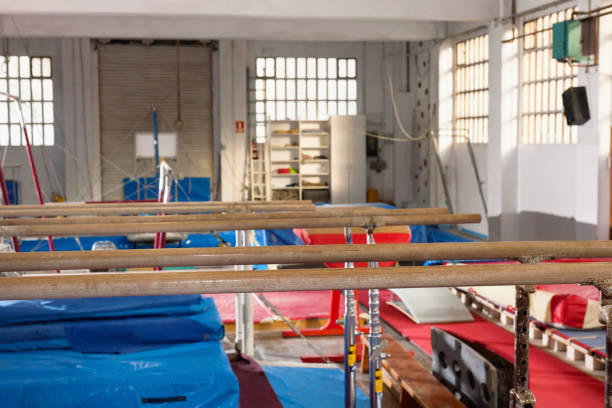
Setting up a gymnastics space can get expensive quickly, especially when buyers assume they need a full facility-style setup from the start. In many cases, that is not necessary. A functional training area does not depend on having the most advanced equipment or the largest number of pieces. It depends on choosing the right items for the users, the space, and the type of training that will happen there.
This matters because overspending often comes from buying equipment that looks impressive but adds little value in practice. A setup works better when it is planned around clear needs instead of assumptions. That is true for home spaces, schools, and smaller clubs trying to make the most of a limited budget.
Start With the Purpose of The Space
Before buying anything, it helps to define what the setup actually needs to do. A home training area for a child learning basic movements is very different from a school program or a club training space. The required equipment changes depending on skill level, frequency of use, and available supervision.
For beginners, the goal is usually to support balance, control, flexibility, and simple movement patterns. That does not require a competition-style environment. Basic mats, a low beam, and a few carefully chosen training tools may be enough. For a more advanced user, the setup may need stronger apparatus, more landing protection, and equipment that behaves more like a formal training space.
Being clear about purpose prevents unnecessary spending. It also helps narrow the list of gymnastics equipment to what will actually be used.
Buy Core Items Before Extras
Mats usually come first because they support safety across many different drills. A good mat can be used for floor practice, stretching, basic tumbling work, and landing support. From there, the next priority depends on the type of training. A low beam may make sense for balance work. Adjustable bars may be useful if bar drills are part of the plan. A wedge mat can support rolls, handstands, and body positioning drills.
Starting with a smaller set of useful items often creates a better setup than buying several specialised pieces that only serve one purpose. Well-chosen gymnastics equipment should support multiple activities whenever possible, especially when the budget is tight.
Match The Equipment to The User Level
Overspending often happens when buyers choose equipment that is too advanced for the current stage of training. It is easy to assume that higher-end equipment is always the better investment, but that is not always true.
For beginners, simpler setups are often more effective. Low apparatus, softer mats, and adjustable features help build confidence and reduce risk. Competition-style dimensions and firmer surfaces may be useful later, but they are not always necessary at the start. In fact, they can sometimes make learning harder.
Choose Versatile Equipment
Versatility is one of the best ways to control spending. Equipment that supports several drills gives more value than pieces with a very narrow use.
A wedge mat, for example, can be used for rolls, handstand drills, stretching, and body-shaping work. An adjustable bar can remain useful as the user improves. Panel mats can support floor work, landings, and basic conditioning. These kinds of items help a setup stay useful for longer.
When choosing gymnastics equipment, it helps to ask one simple question: how many training uses can this piece realistically support? The more flexible the answer, the stronger the purchase usually is.
Keep The Setup Practical
A functional gymnastics space is not defined by how complete it looks. It is defined by whether it supports consistent, safe training without wasting space or budget. That usually comes from clear priorities, careful selection, and a willingness to start with the basics.
The smartest approach is often the simplest one. Buy the gymnastics equipment that matches the real use case, make sure the core items are reliable, and add more only when the setup genuinely needs it. That is how a training space stays practical without becoming unnecessarily expensive.